Proving an Unsourced Compiled Genealogy
3 min readJuly 8, 2022
Tracing Acadian ancestry can be tricky. A lot of information about the old Acadian families comes from compiled genealogies that are rarely sourced.
Active Research Project
Tracing the King family to Acadian roots in the 17th Century.
Seeking collaborators to solve the mystery of Peter King’s origin. Follow one family’s 100-year journey across Nova Scotia, Quebec, Ontario, and Missouri. Genetic genealogy aims to reveal long-forgotten family connections that lead back to the Expulsion of the Acadians from Nova Scotia in the mid-1700s.

Project Overview
The current case file combines documentary research, line reconstruction, and genetic evidence to identify Peter King’s family of origin.
Peter King first appeared as a 30-year-old man in Bathurst, Ontario, where he married Margaret Bulloch on 1 March 1850. He worked as a farmer in nearby Lanark to support Margaret and their one-year-old baby, Andrew. A second child, Jeanette, was likely born around 1855 to the couple in Ontario, although no direct evidence has surfaced.

Peter arrived in Missouri before 8 February 1865 when he married Amanda (Hollon) Spencer in Sullivan County. Illiterate and landless, Peter continued to work in farming as a day laborer. He and Amanda started their family in 1869 in Pleasant Hill with the birth of daughter, Melissa. The King family grew with the addition of son Ephriam Ferdinand “Ferd” born in 1872.
Peter died sometime before 1880. Amanda and Melissa, who sometimes were listed as Ellen and Nancy in various records, along with Joseph, another hypothesized son of Peter and Amanda, went to live with Peter’s first son, Andrew, a grown man living in Sullivan County, Missouri. All together, Peter likely had five children with two wives:

Y-DNA evidence from a male test taker on the King line suggests Peter descends from Jean LeRoy dit Laliberté, an early settler of Acadia, today’s Nova Scotia.
A hypothesized family tree can be found on Ancestry.com. But more DNA proof is needed to isolate Peter’s specific line of descent from Jean. Many Acadians and Québecois anglicized their names when they immigrated to English-speaking areas of Canada and the United States to better integrate into their new communities. Roi is the French word for king, giving a clue about the paternal line name change from LeRoy to King.
Research Objective
The project is currently centered on one guiding question and two lines of active evidence gathering.
The objective of this research project is to answer the following question: Who were the parents of Peter King?
Currently, research is focused on two areas:
Recruiting more DNA test takers who descend from Peter King.
Finding DNA matches who descend from Peter’s putative sisters Cécile, Olive, Scholastique (Christine King), and Louise to test the hypothesis that Bienvenu Roy and Marie Cécile Choret are the parents of Peter King.
Known married children from each sister:
Work to verify each of these matches’ generational links back to common ancestors on the King-Roy line is presently being conducted. When working with common ancestors that far in the past, a larger body of test-takers is needed to find matches who share DNA with the proposed common ancestors to add validity to hypothesized familial connections.
DNA Evidence
Expanding independent descendant lines is still the fastest way to improve evidence quality and genome coverage.
So far five descendants of Peter King have shared their AncestryDNA results. To achieve the best coverage of his genome and a higher likelihood of finding DNA matches relevant to his parents’ families, more descendants of Peter King are needed.

Autosomal Coverage
A broader spread of autosomal descendants is required to isolate relevant matches and strengthen shared-ancestor hypotheses.
To find relevant matches that will help identify the parents of Peter King, more autosomal DNA test takers are needed to share their DNA test results at AncestryDNA. The more descendants that share their results through independent child lines, the more coverage will be achieved.
See: Paul Woodbury, “Covering Your Bases: Introduction to Autosomal DNA Coverage,” blog post, 2020, Legacy Tree Genealogists.

Collaboration
Additional descendants of Peter King and the hypothesized Roy sisters can materially improve this research.
I am looking for additional descendants of Peter King and his hypothesized sisters Cécile, Olive, Scholastique, and Louise Roy to share their DNA results or take a DNA test to help find relevant DNA matches on the King line. A small group of DNA testers have joined the team, but more are needed. Collaborators can participate in any of the following ways:
In return, collaborators will receive updates on the project and receive a copy of the final article once it’s published.
How to share AncestryDNA results in four easy steps: see this Ancestry.com support article. Note: this can only be done on a desktop browser and not through the Ancestry mobile app.
My Ancestry username is AMHgenealogy. Use this username to share the DNA results in one of the following roles: viewer or collaborator.
If your DNA is included in other testing company databases, such as FTDNA, MyHeritage, 23andMe, or GEDmatch, please get in touch.

Project FAQ
Common questions about collaboration, privacy, publication, and how genetic genealogy fits into the research workflow.
I will include only information about how you relate to Peter King’s descendants or siblings. That may include a diagram of your lineage, a table that compares the amount of DNA you share with other matches, or any privately held records you are comfortable sharing.
I will never have access to your raw DNA. I will look only at the amount of DNA, such as the number of centimorgans (cM) and segments, you share with other DNA matches.
Only if you consent in writing. If you do not wish your name to appear in the article, any information pertaining to you will be anonymized.
I am happy to share portions of the article in draft format that pertain to you for feedback. Once the manuscript is submitted to a publisher, my ability to make changes is limited to correcting or clarifying factually incorrect or confusing information.
The International Society of Genetic Genealogy defines the term as:
Genetic genealogy is used as supporting evidence when no genealogical record can be found to directly connect family members in the present or past.
The output of this project will be an article written for a scholarly journal with a peer review process by credentialed experts who specialize in DNA.
It may take a year or more before the article is finalized and published. The process of submitting to scholarly journals includes rigorous peer review and editing.

Researcher
Amy King Hayes combines a research analyst’s discipline with specialized DNA and genealogical training.
Amy King Hayes is a research analyst specializing in marketing best practices for the technology industry. She applies her research and writing skills as a volunteer genetic genealogist. She obtained her bachelor’s degree in journalism from the University of Missouri.
She successfully completed DNA-focused courses with the Salt Lake Institute of Genealogy and Research Like A Pro With DNA study group instructed by credentialed genealogists specializing in DNA.
She holds memberships with the National Genealogical Society, the American-French Genealogical Society, Quebec Genealogy e-Society, and l'Association des Familles Roy d'Amérique.
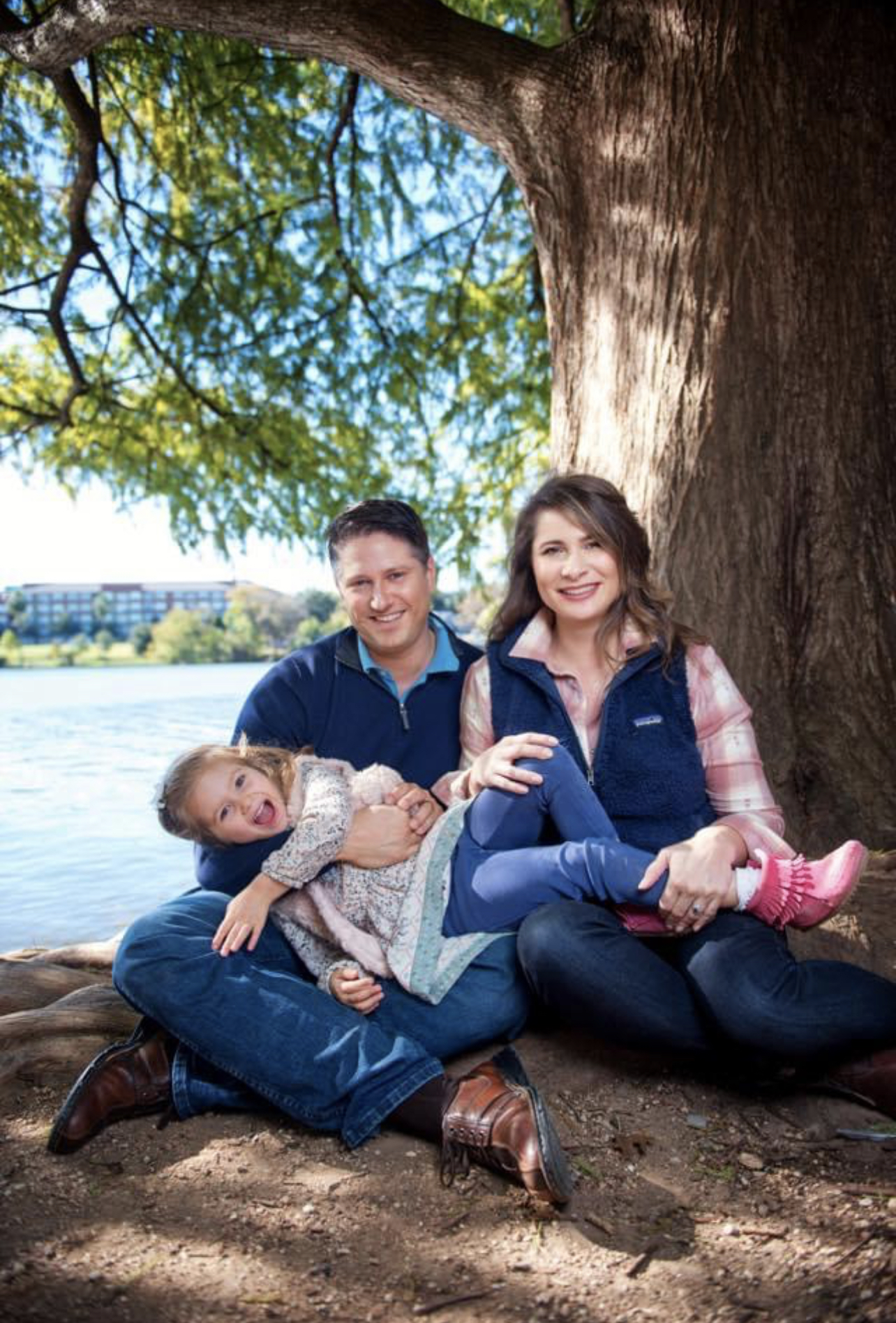
A Kansas City native, Amy lives in Austin, Texas, with her husband and daughter.
Field Notes
Short research notes documenting evidence, hypotheses, and breakthroughs connected to the Peter King project.
Tracing Acadian ancestry can be tricky. A lot of information about the old Acadian families comes from compiled genealogies that are rarely sourced.
Plat books are such a fascinating resource, especially when they can be aligned to a census taken around the same time.
A newly shared AncestryDNA match list expands the project's coverage of Peter King's descendants and strengthens the working identification of Melissa King.
A burial record from Ault, Colorado provided the first direct evidence for Andrew King's death and opened a new path for additional vital records research.
Contact
Use the form to prepare a message about family information, research questions, or DNA database access.
Direct Contact
If you already know you can help with the research, a direct email is the fastest route.
Descendants of Peter King and the hypothesized Roy sisters, plus collaborators with relevant records, photos, or DNA matches.
Lineage details, known family stories, and any access you can provide to AncestryDNA, MyHeritage, 23andMe, FTDNA, or GEDmatch results.